
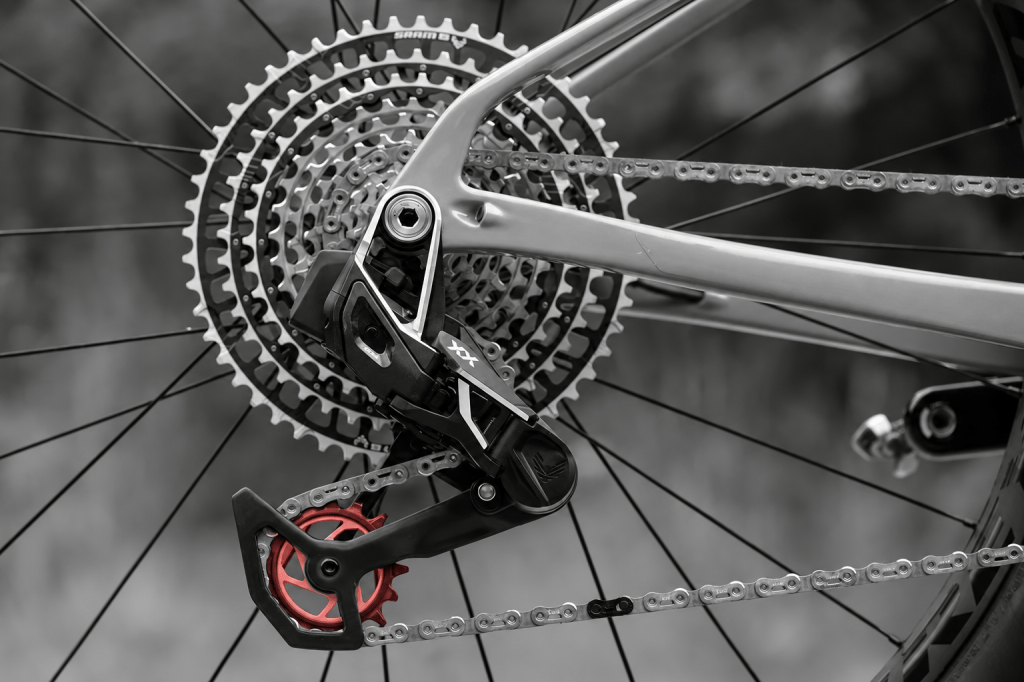
‘My name is Paul and I ride 34–36. It has been 985 days since I rode 36–30…’
Maybe this would be the start of my contribution at a Big Cogs Anonymous meeting. Although anonymity is somewhat out of the question when you are running a pie plate on your rear wheel.
And if you’ve been riding one for a while, statistically you are likely to run into one of those hoary old veterans who will look at your cassette and chainrings, roll their eyes and tell you how they used to climb on 42–21.
Kudos to them, but this is my ode to big cogs: why I have them on my bikes, and maybe why you should too, even if you don’t need them.
Cheating? the science of the climb
To some traditionalists there may be a faint whiff of cheating the climb with lower gears. Is that fair? Let’s quickly do the science. A physicist thinking about the effort required to move a bike will use the concept of ‘mechanical work’.
Getting nerdy, the approximate formula looks like this:
Power required = (mass × gravity × gradient × speed) + aerodynamic drag + rolling resistance
There is a worked example in the footnotes, but the important point is that on steep gradients the gravity term (the stuff in the brackets) dominates almost everything else. Drag and rolling resistance, which can really matter on the flat, don’t here. At typical climbing speeds, gravity can account for nearly 90% of the total power demand. The physics is non-negotiable whether you spin or grind.
The physiological cost of how we produce that work isn’t and this is where gearing matters. At any given power, cadence and crank torque trade off against each other. Turn the pedals more slowly and each rev has to produce more torque.
It’s these high-torque, low-cadence efforts that most of us recognise as the hard yards of climbing. They require more force from our muscles and change the load through the joints.
Back in the day, when cogs were smaller, most climbing was like this. Take a step back in time and watch the best climbers in the world wrestling their bars and testing their knees at the 1974 Giro. And if you thought things were lairy on Alpe d’Huez this year, check out the middle-aged Italians behaving badly. No mankinis or selfies, but plenty of alcohol and chiasso.
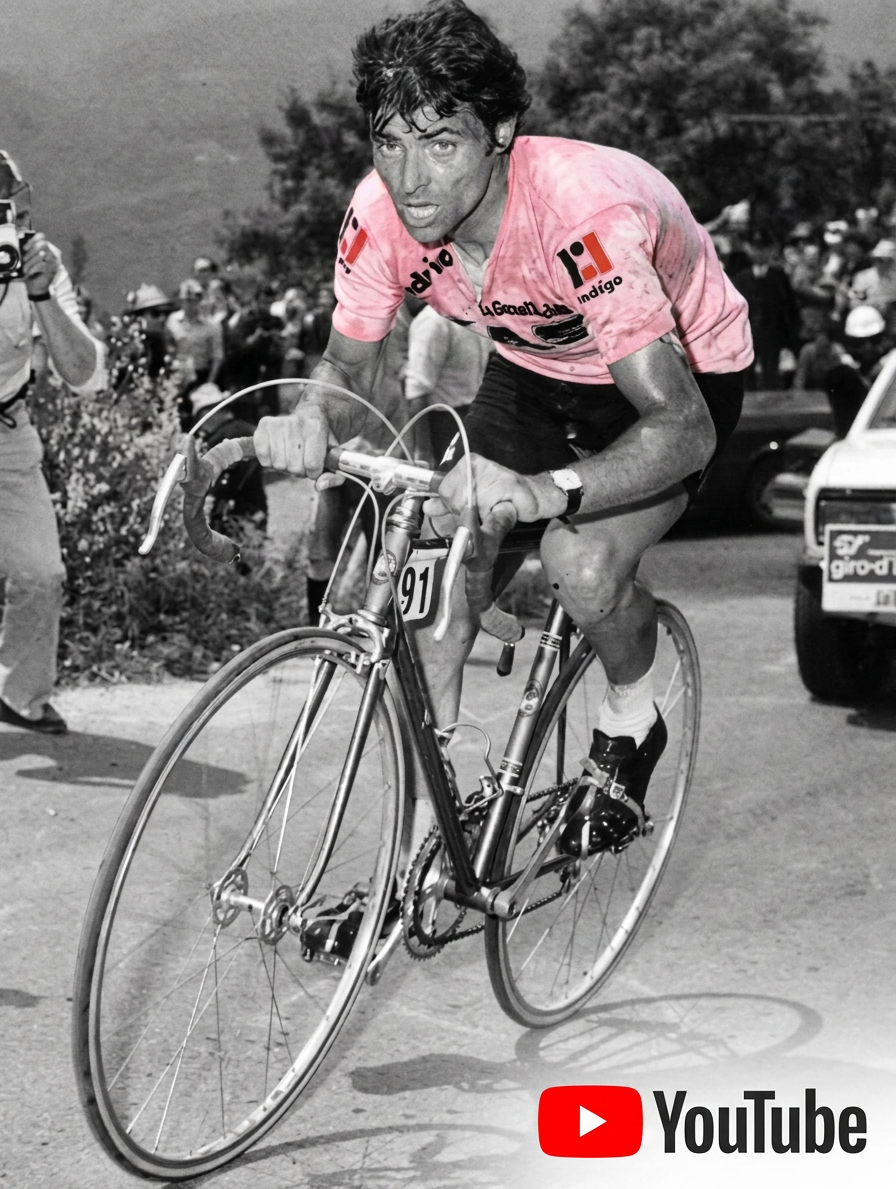
I suspect the difficulty of getting up a mountain with vintage gearing is one reason why climbing became venerated. Anyone can ride them on the flat, but getting up a long steep pass was something different. It was a real test of strength and muscular endurance. As a recreational cyclist, if you could climb a steep alpine pass on 42–21 without putting your foot down, you’d deserve some respect.
Enter lower gears
Technological improvements have given us both more gears and lower ones. Sub-compact chainrings, 13 gears, more capable rear derailleurs, gravel cassettes mean it is now possible to build a road bike with a crazily low gear and high gear. And this has impacted how everyone from the pro peloton to a beginner climbs.
Back in the days of yore, when the road got steep, you could only grind or stand. Human physiology allows nothing else on those gears for any sustained period of time.
Contrast that with Pogi’s legendary assault on Isola 2000 at the 2024 Tour – 38 minutes at an average cadence of 90-95 rpm – a different world. I don’t want to get into a nitpicking session around optimal cadence, but I think it’s fair to say that less torque allows us to lean more on our aerobic capacity and use more fatigue-resistant muscle fibres. This gives the potential for staying fresher and maybe thus faster.
join team pie plate – YaY or NAY?
First, the disadvantages. To my mind there are really only two physical issues and they’re small.
The first is weight. An 11–36 Shimano 105 cassette weighs roughly 100 g more than an Ultegra 11–30. In the grand scheme of things, that is trivial. And there are plenty of light and cheap options on AliExpress if you want to roll the dice. You will need to check your derailleur’s capacity as some won’t technically take a large cassette. But there are some easy workarounds – speak to your LBS.
The second is ‘gappiness’. Larger-range cassettes have bigger jumps between sprockets as you hit the lower gears. If you are used to a tightly-spaced cassette, this can create a Goldilocks problem: one gear feels too easy, the next one too hard. That is real, but in my experience it is also something you learn to work around and it can maybe even teach us about producing power smoothly across a wide range of cadences.
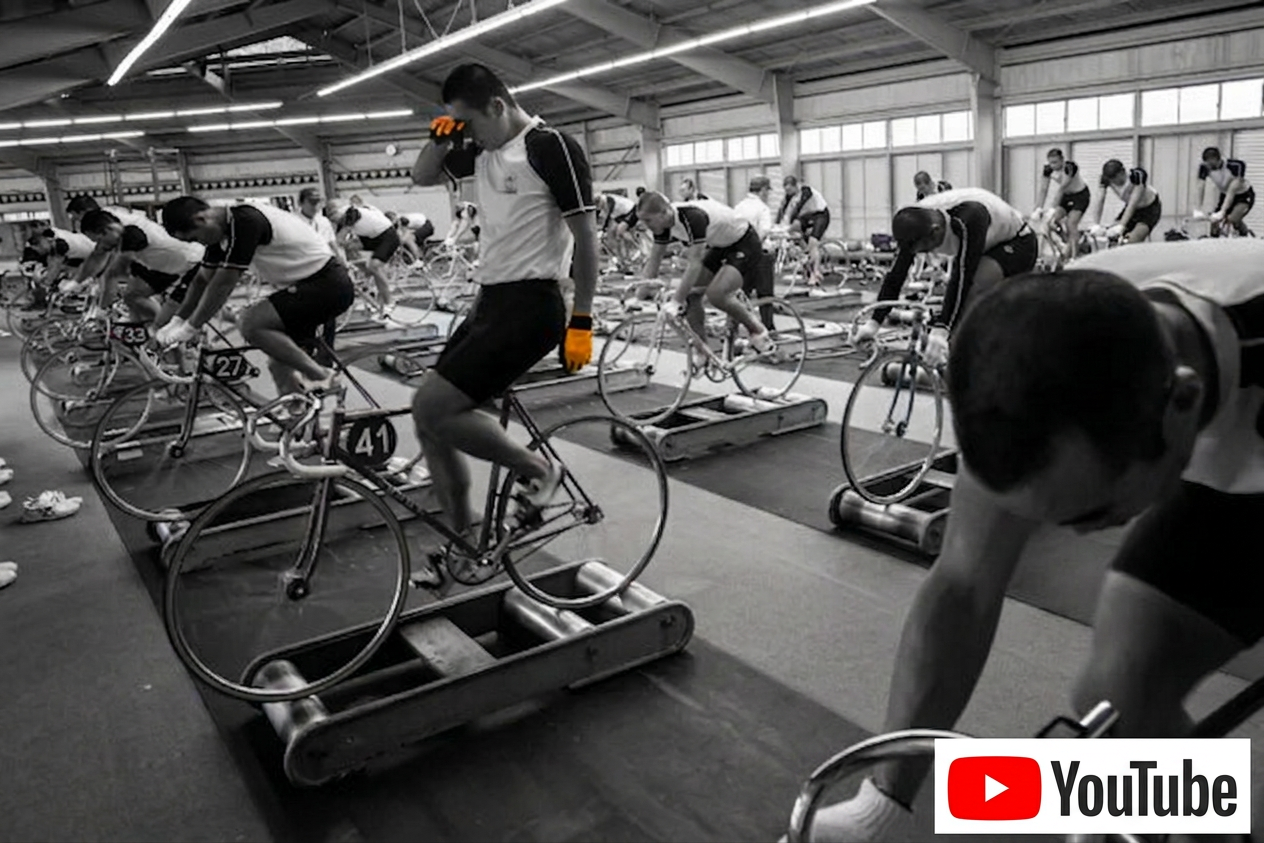
Beyond any potential performance gains that cadence flexibility might bring, I find a certain beauty in the ability to do this. I’ve always loved watching these cadence drills from Keirin School in Japan – pure control.
Beyond the physical drivers, there is perhaps a larger psychological issue involving perception and status. Do we want to be confused with someone who ‘needs’ a bigger cassette? Is there still some kudos to be had to muscling a climb in a smaller cog? Maybe, and the more performance-oriented you and the group you ride with, the larger that impact may be.
Lastly aesthetics might come into play – you might just find them fugly. If they give you the ick, steel yourself, the growth in gravel and 1x means you’re going to see more of them.
So, with the downsides acknowledged, why do I run a wider cassette, even though I’m a decent climber?
1. Asymmetric risk and reward
For me, the lower weight and smaller jumps are small benefits. The cost of discovering that you would really quite like another gear is larger. The longer the ride and the greater the vert, the more compelling that asymmetry becomes. For me, this is not about putting a foot down (though it will be for some), it’s about enjoyment and fatigue management. And of course, with the bike, it’s about the right tool for the job. If all I did was race crits, or if I lived in the flatlands, I’d run a tightly-spaced cassette.
2. Choosing the POWER SOURCE
To me, the biggest benefit of a wide-ranging cassette is deciding what kind of effort I want a climb to be. If I want a relatively high-cadence aerobic effort, I have the gears to do it. If I want deliberate low-cadence, high-torque work, I can choose that instead.
Some of the biggest gains I have made in power production on a climb (whilst not screwing my creaky knees) have come from gradually increasing the amount of higher-torque work I can handle. Wide gearing has allowed me to do that. ‘Torque on/Torque off’ as Mr Miyagi might say.
3. Keeping easy rides easy
I live in the beautiful city of Bath. It is a lovely place to ride, but there are virtually no flat roads.
An 11–36 cassette allows me to do consistent outdoor Zone 2/recovery rides at a cadence of my choice. On the typical 36-30 that many bikes now ship with, an easy ride can unwittingly turn into an impromptu tempo session.
For me, the choice is simple. You may have an entirely different view.
Respecting the gear
Should we respect those who climbed on 42–21? Yes, undoubtedly. But I think we should also celebrate what modern gearing has done – it has democratised the hill.
It allows more people to ride steeper climbs under their own steam. It gives newer/less powerful/more injury prone riders options they simply would not have had a generation ago. Options that will allow them to enjoy the hill, not hate it.
So, as you ride past someone casually twiddling a pie plate whilst you are dancing on the pedals with screaming legs, remember two things:
First, keep on dancing ’til you go around the bend. No ragged breathing or pain face allowed. Appearances must be kept up.
Second, don’t worry, they are going to take longer. This will allow time for your sweat to dry and your breathing to return to normal. You will look composed and be nonchalantly chatting over coffee when they roll up to the cafe.
Or if you are mashing the pedals with screaming legs and someone effortlessly sails past you spinning at 90 RPM, remember, they are not cheating. Gearing cannot bend the laws of physics, everyone has to pay gravity’s price, some just pay it differently.
But hey, what do I know, I’m just some chopper.
FootnoteS
Worked example
For a 75 kg rider on a 9 kg bike — 84 kg total — climbing an 8% gradient at 15 km/h (4.17 m/s), the power needed to overcome gravity is:
M × g × gradient × v
≈ 84 × 9.81 × 0.08 × 4.17
≈ 275 W
Rolling resistance, assuming Crr = 0.005, adds about 17 W, while aerodynamic drag, assuming CdA = 0.40 m² in still air, adds roughly another 17 W.
Total power is therefore about 310 W, meaning gravity accounts for around 89% of the total power demand.
On a steeper 12% gradient at 12 km/h, gravity’s share rises to about 94% — roughly 329 W out of 352 W — this is because aerodynamic drag falls sharply as speed falls.
Footnote in the footnote. Although, I understand the general principles, I am not a physicist. This model was built and crosschecked by ChatGPT and Claude. If you are a physicist and want to nitpick, complain directly to them. They are always polite and constructive 😉


Leave a comment