
I think we can all remember the first time we really cracked on the bike.
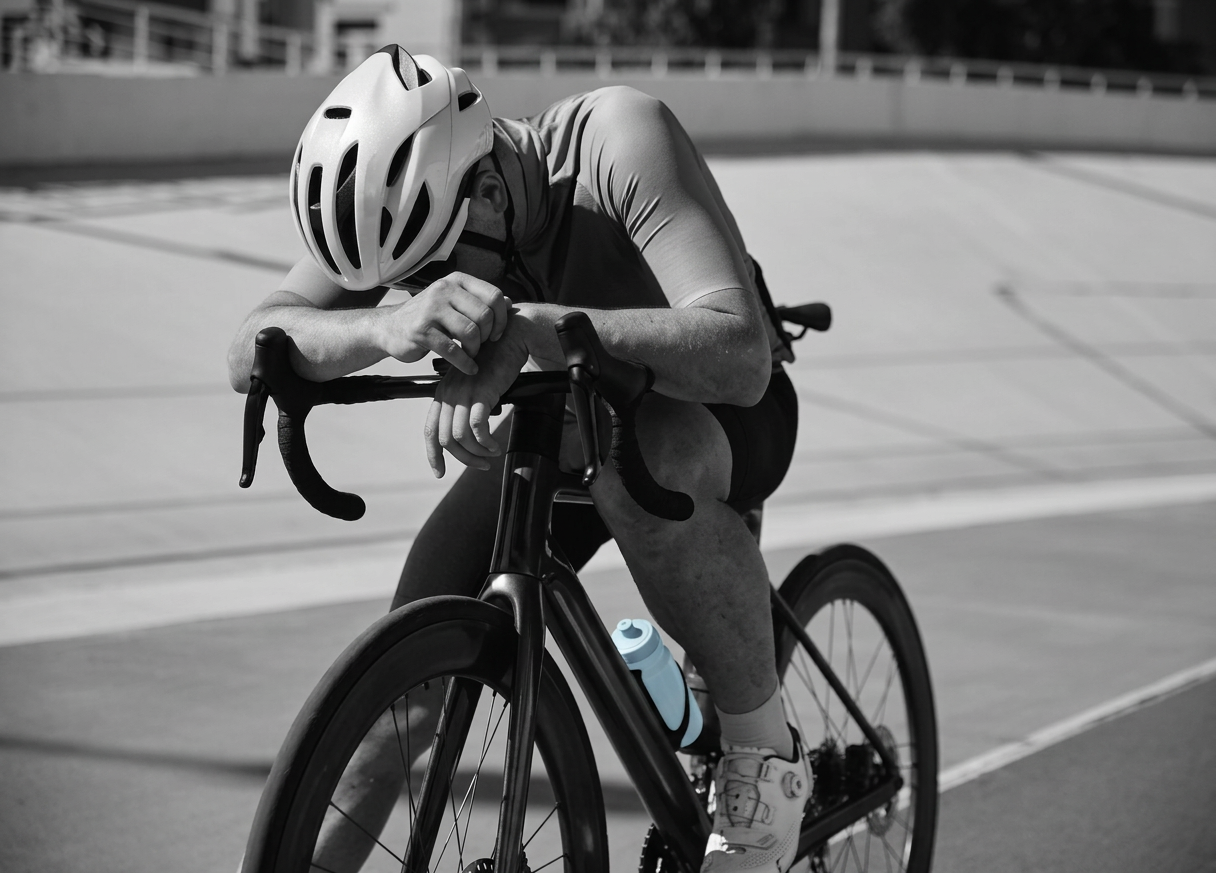
For me, it was forty minutes into my first paceline. The surprising thing is, it should have happened 10 minutes earlier. It didn’t, because of an intervention by one of the local legends.
I was on the raggedy edge and all over the bike. As he serenely passed me in the line he shouted, ‘It’s all in your head, you can do this.’
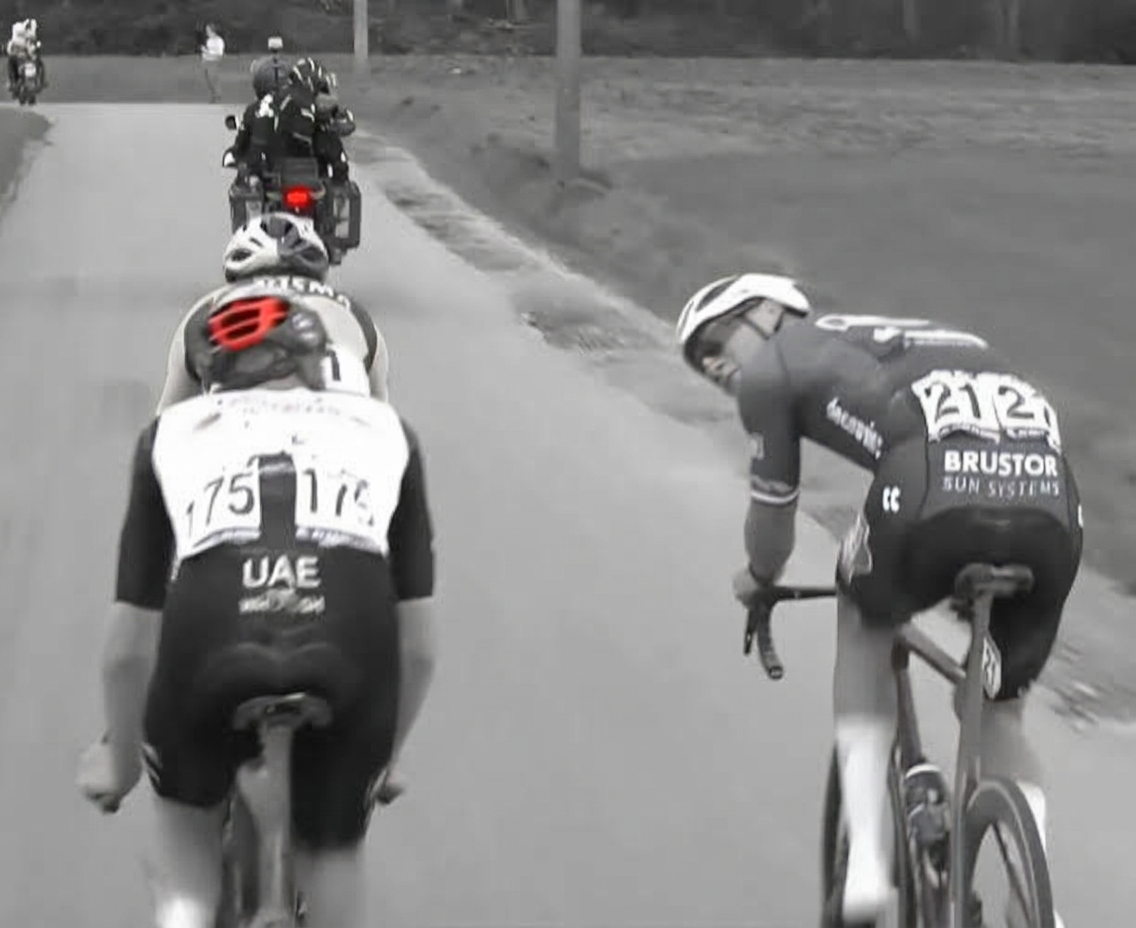
I repeated that mantra until I finally broke. What gave up, my mind or my body? There is no way to know, but as I have raced and trained for hill climbs over the last couple of years, I have spent some time thinking about how what we say to ourselves affects our performance.
So here is my take on the science of self-talk, what I have found works for me and some simple rules that might make things a little easier when the going gets tough.
Self-talk
We all talk to ourselves. Sometimes the voices are kind, positive and supportive. Sometimes less so. We all intuitively know these voices can influence our mood, but can they affect our performance?
In short, probably yes. Meta-analyses and systematic reviews that aggregate a wide range of research found an overall benefit from self-talk interventions. What kind of thing do they show?
One of the best-known studies comes from Samuele Marcora’s research group. In Talking yourself out of exhaustion, participants were trained for two weeks to use motivational self-talk and then rode at 80% of peak power until exhaustion. Before the intervention they lasted an average of 637 seconds; afterwards, 750 seconds.
Other studies have found effects both much smaller and larger. In a 10 km time trial, motivational self-talk made riders almost 4% faster. In trained cyclists riding in the heat, time to exhaustion went up by almost 40%. Like most sports science research, all these studies are all small, so treat the numbers as a sign that self-talk can help, not a cast-iron guarantee of how much it will help you.
Magic words?
Aladin simply had to mutter open sesame to get to the good stuff. Self-talk is a bit more complicated – what words should we use, how should they be said, etc. From personal experience and perusing the literature, here are four key ideas/distinctions that I think are worth knowing about:
- Motivational self-talk: this is the kind general instruction to keep going when every fibre of your being wants to stop.
- Instructional self-talk: the more specific technical reminders that might improve performance, e.g. focus on cadence or form.
- Who’s talking: the difference between ‘you’ and ‘I’.
- Killer words: the impact of negative self-talk.
Motivational talk
The phrases used in most self-talk research aren’t sophisticated. They are the kind of basic stuff you used to see on one of those cheesy ‘Successories’ posters: keep going, stay strong, you can do this, keep pushing.
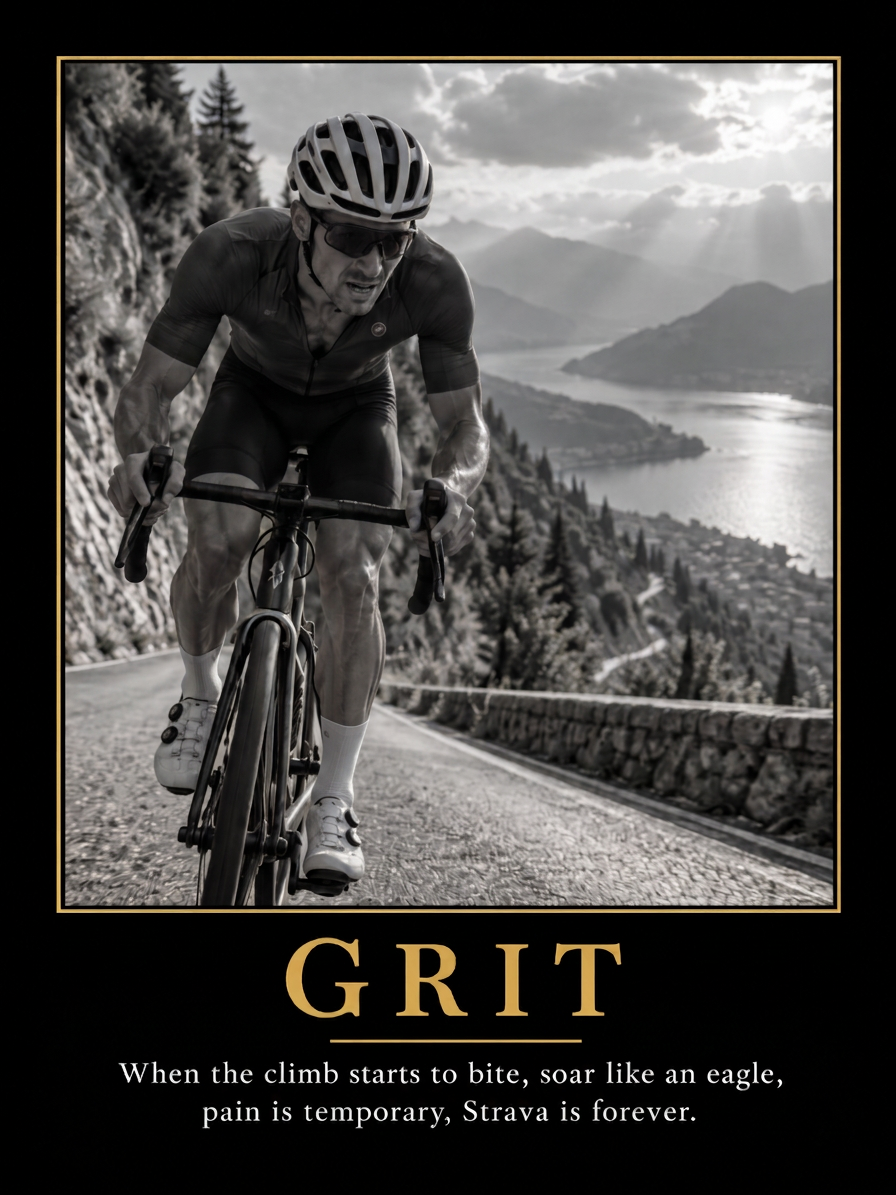
These kinds of generic positive words do seem to push us forward. Importantly, some research gets individuals to come up with phrases that work for them. FWIW, I think this kind of personalisation is important – what works for me might make you barf/roll your eyes/snigger. With that being said, here’s a couple of phrases that I use to keep me on the straight and narrow when doing intervals.
When I’m just not in the mood and want to give up as the first set starts to hurt: ‘You know the first set is always hard, you can get through this.’
And when I’m on the edge at the end of an interval and just want to stop:
‘This is where you’re made, this is where everybody else gives up.’
Importantly, I’m deploying specific phrases for particular problems, which I think works better than a more generalised ‘you got this’ approach.
Instructional
Motivational talk is all about keeping going. There is also a reasonable body of work on instructional self-talk, i.e. reminding ourselves to focus on the important things that can improve performance. Some studies suggest it can help most in sports that need fine motor control, e.g. putting in golf.
I haven’t found any studies that cover cycling, but from personal experience I think there is something useful here. This year, I have spent more time than I’d like doing VO2 intervals. I’m reasonably good at self-monitoring, and what I have noticed is that when my breathing goes awry, perceived effort goes up and I’m more likely to fail.
When working hard, I run a simple instruction set: I use the cue word ‘breathe’ on the in-breath and ‘relax’ on the out-breath. I’ve tried to turn these into triggers. ‘breathe’ prompts a deep diaphragmatic breath, ideally through my nose. ‘relax’ is both about squeezing the breath out and not having a death grip on the bars. It seems to work for me (most of the time).
You vs me
Think about your self-talk. What do you actually say to yourself when the going gets tough? ‘I can do this’, or ‘You can do this’? Wierdly, this might matter. One experiment compared first-person and second-person self-talk in a 10 km time trial, using phrases such as ‘I can keep pushing’ vs. ‘You can keep pushing’. The riders were faster with ‘you’. It’s a single small study, but second-person self-talk has also been found to help people manage themselves outside sport. Why might it work? The researchers suggest self-distancing. It’s almost as if a coach has moved inside your head.
I don’t know why, but I’ve always talked to myself in the second person. Lucky me! However, you have full permission to go full Tony if I ever start doing the cycling YouTuber thing of referring to myself as ‘we’. Where did that come from???
Killer talk
Probably the most important element of self-talk to understand is the negative kind.
Surprisingly, the systematic review found that negative self-talk did not impede performance per se. My take is that it depends on the kind of negative self-talk.
Let’s take an example of when our legs are burning on the hill. We might say:
this is fucking horrible, let’s do this, or maybe
I’m cracking, I can’t hold this.
Both contain negative language, but psychologically they are likely doing different things. The first acknowledges the pain and then mobilises effort. The second is a prediction of failure.
I know from long personal experience that if I start saying I can’t hold it, I won’t be able to. To be honest, I can’t tell whether the words cause the failure or it’s just my brain reporting that it’s coming. Either way, if I start talking like this, I need to change the language quick sharp or it will become a self-fulfilling prophecy. Some research supports this approach. In the 10 km time-trial study, riders learned to spot their own habitual negative thoughts, such as feeling they’d worked too hard, and to answer them with prepared statements about managing their energy to the finish. They got faster.
Simple rules
So, back to that paceline. Was it all in my head? Probably not all of it. Ultimately I didn’t have the legs and no amount of Jedi mind tricks could change that. But the research suggests that some of it is in our heads, and that part we can work on. Here are some simple things that anyone can do:
- Find your own words: Generic slogans probably work, but phrases you’ve chosen yourself are better.
- Talk to yourself as ‘you’: It costs nothing and it might just help.
- Know your killer line: Work out which negative thought tends to come just before you crack and have a reply ready before you need it.
- Use cue words for technique. With a bit of practice a single word like ‘breathe’ or ‘relax’ can prompt an action without much thought.
- Practise it in training. The studies that worked had riders rehearse their self-talk for about two weeks first.
None of this will turn you into a different rider, but it may get you a bit closer to the rider that you could be. It gave me 10 minutes on my first try.


Leave a Reply