
‘I want it all, I want it all, I want it all and I want it now’
So sang the late great Freddie Mercury.
There is nothing wrong with wanting lots of things, it’s part of human nature. But when those things are difficult to get, believing that you can have them all usually fails. Many times in my professional life, I have seen smart effective people and teams trying to do too much. Rarely does this end in Icarus-like disaster, more like average results.
Cyclists are no different. We might want the bucket-list trip in the mountains, the good placing in a race, doing lots of epic rides, maybe with a side dish of spicy KOMs for good measure.
There’s nothing wrong with any of these objectives. The problem comes when we start stacking things on top of each other that are perhaps not that compatible.
This kind of ‘wanting it all’ problem and how to deal with it has been discussed extensively in management research on strategy. I think some of the insights and solutions are useful if you’re training for the hill, or anything else.
Strategy
Strategy has layers of complexity, but at heart it’s pretty simple. It can can be thought of as a process of:
- Deciding what objectives we’re trying to achieve.
- Understanding the constraints and environment we face.
- Choosing the few actions or positions most likely to meet our objectives.
- Accepting and living with the trade-offs those choices require.
There’s scope to screw up at each of those levels. I’ll highlight some of the failure modes I’ve seen then touch on how I’ve tried to avoid them.
Deciding what objectives we’re trying to achieve
If we’re not clear about what it is we are actually trying to do, then every decision that follows is built on shaky ground. For example, there are big differences in taking part in an event vs. finishing in the top 50% vs. being in the top 10%.
When we don’t have clarity, we can’t make effective plans to get there. And let’s be clear we don’t need plans or strategy to simply have a good time on the bike. If the thought of bringing strategy to your funtime is giving you the ick, you can head here for some gentle relaxation.
Understanding the constraints and environment we face
The root cause of many of the poor outcomes I’ve seen professionally is being unrealistic about constraints. This is usually relates to wanting to do too many things that spread resources too thinly.
How does this translate to the bike? We might want to be really competitive at both mountainous gran fondos and at punchy hill climb races. Both of these involve climbing, but while some of the training will overlap, they are fundamentally different events.
If we want to excel rather than just get around and if we don’t have Pogi genes, we likely need to narrow down what we are doing.
This is an area where I see many people struggle. Most of us just simply don’t like being constrained. This can have many causes from FOMO, to not liking being tied-down to a course of action.
Choosing the few actions or positions most likely to get us there
Once we have made a choice, constraints bite again.
Depending on what we want to do, there will be certain things that are more likely to get us there. Of course, we should focus on those. Importantly, however, there are also things that may slow our progress. Problems arise when these things are enjoyable.
This year, my plan involves some tough VO2 work. To get this done at the intensity I need, I have had to accept not doing some of the riding I really like e.g. pacelines and segment bashing.
Neither of those things are inherently bad for fitness, they just both gobble finite capacity to go hard. The enemy of good strategy is rarely often not something obviously stupid. It is something good that doesn’t fit.
Accepting and living with the trade-offs those choices require
Training programmes offer no guarantees. However, they can be guaranteed not to deliver if we don’t do them, or don’t execute them properly.
Accepting the trade-offs of structured training on paper is only half the problem. We then have to keep accepting them when the sun is out, when our legs feel amazing and we’re missing out on fun.
There are many paths to failure here. One to be aware of is something called ‘present bias’. In short, this means that immediate costs and rewards receive disproportionately greater psychological weight than delayed ones.
A simplified version looks like this:
In advance: I want to achieve goal X and commit to doing the hard yards to make that happen. At the commitment point, we give greater value to the future sense of achievement than to the future costs of training.
When the training needs to be done: the immediate costs of training such as pain, FOMO, or boredom is weighted more heavily than the future achievement of the goal. We prefer the immediate relief of skipping the necessary training and maybe doing something that we like (that might not help us reach our goals).
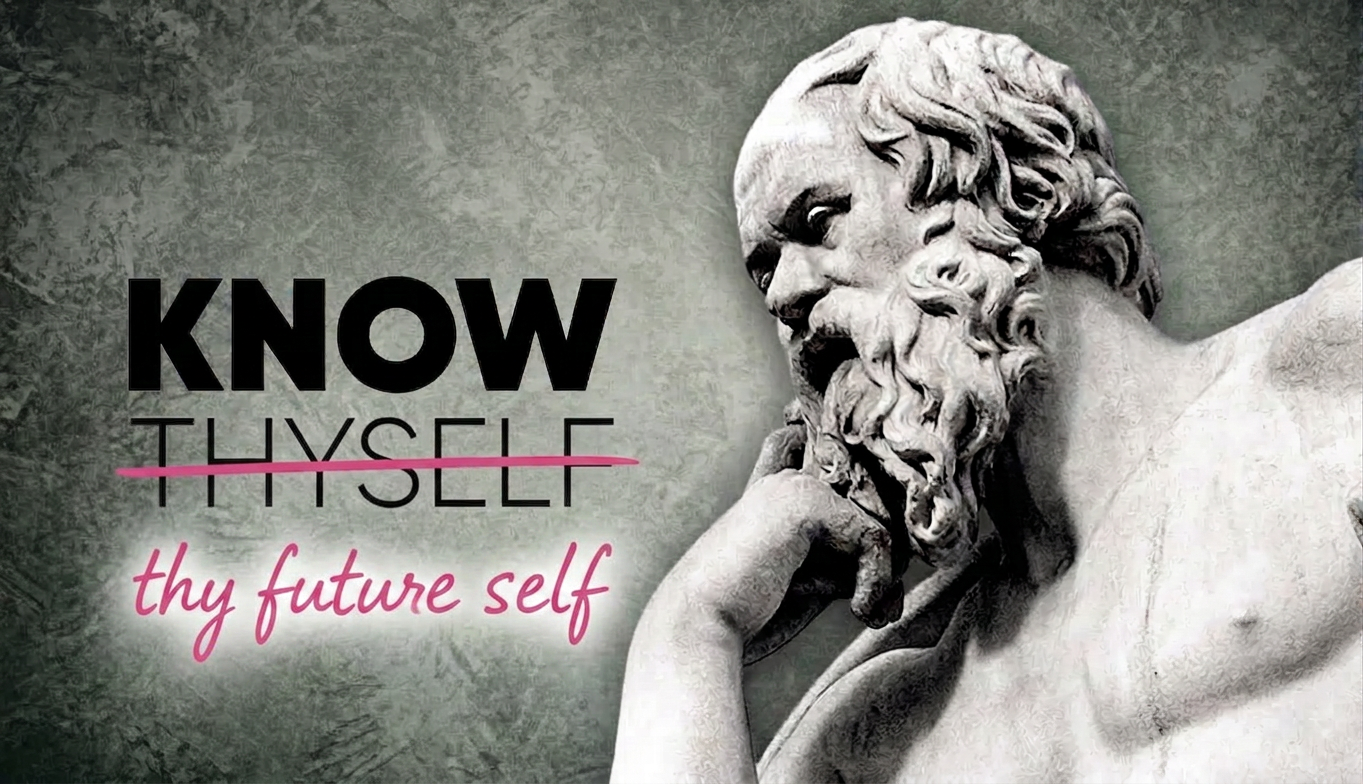
Some of us are more susceptible to this than others. As the saying goes, ‘know thyself’, or perhaps more accurately in this case, ‘know thy future self’.
How we value these costs and benefits can also be affected by broader factors. For example, my hill climb training has been made harder by the summer we have had. Grinding through yet another set of unpleasant intervals when the weather outside is beautiful is tough. Sadly, strategy does not become less relevant just because it is sunny.
What can research on strategy tell us?
Quite a lot. Too much to cover here. So I want to finish with a couple of simple takeaways and how I’ve used them practically.
Good to Great
In Good to Great, Jim Collins argues that to succeed, organisations need to operate at the intersection of:
- what they can be best at
- what drives their economic engine
- what they’re deeply passionate about
The economic engine part isn’t relevant here, but the other two are.
I started this year with a range of things that I might do. One of those was reaching the age-group leaderboard on some classic cols in the Alps.
But once I did the analysis, it became clear that while I might do well, cracking the top ten was unlikely even with a gruelling training plan. Finishing 72nd simply wasn’t enough potential reward (because I certainly wouldn’t be enjoying the attempts when doing them).
So I refocused on UK hill climb racing instead.
Here I knew that, with luck and the right training, I could win in my age group. I also knew what training to do and that I could commit to it, unpleasant as some of it is.
The point is not that hill climb races are somehow a more worthy objective than Alpine cols. There is simply a better match between the goal, my capabilities and the training I was willing to do.
Porter and the Nationals
In ‘What Is Strategy?’, Michael Porter argues that organisations shouldn’t simply prioritise. A strategy only becomes meaningful when an organisation deliberately declines attractive alternatives.
For most people I know who like hill climb racing, the National Championships is a key goal. It’s always a well-supported, high-energy event and doing well here in absolute or age group terms brings a sense of both internal achievement and external kudos.
This year’s event is relatively close to me and is a beautiful climb, but it’s very different to everything else I’m racing.
I’m targeting steep, three-to-six-minute climbs. The Nationals is a shallow, roughly 20-minute effort.
In contrast to the Alps, this is something that I could be good at. However, the training I’d need to do to excel does not neatly overlap with the steeper stuff. So I made the choice and took the Nationals off the table.
Skipping a race you’d be rubbish at is easy.
Skipping a race you’d enjoy and might actually be good at is strategy.
The stop-doing list
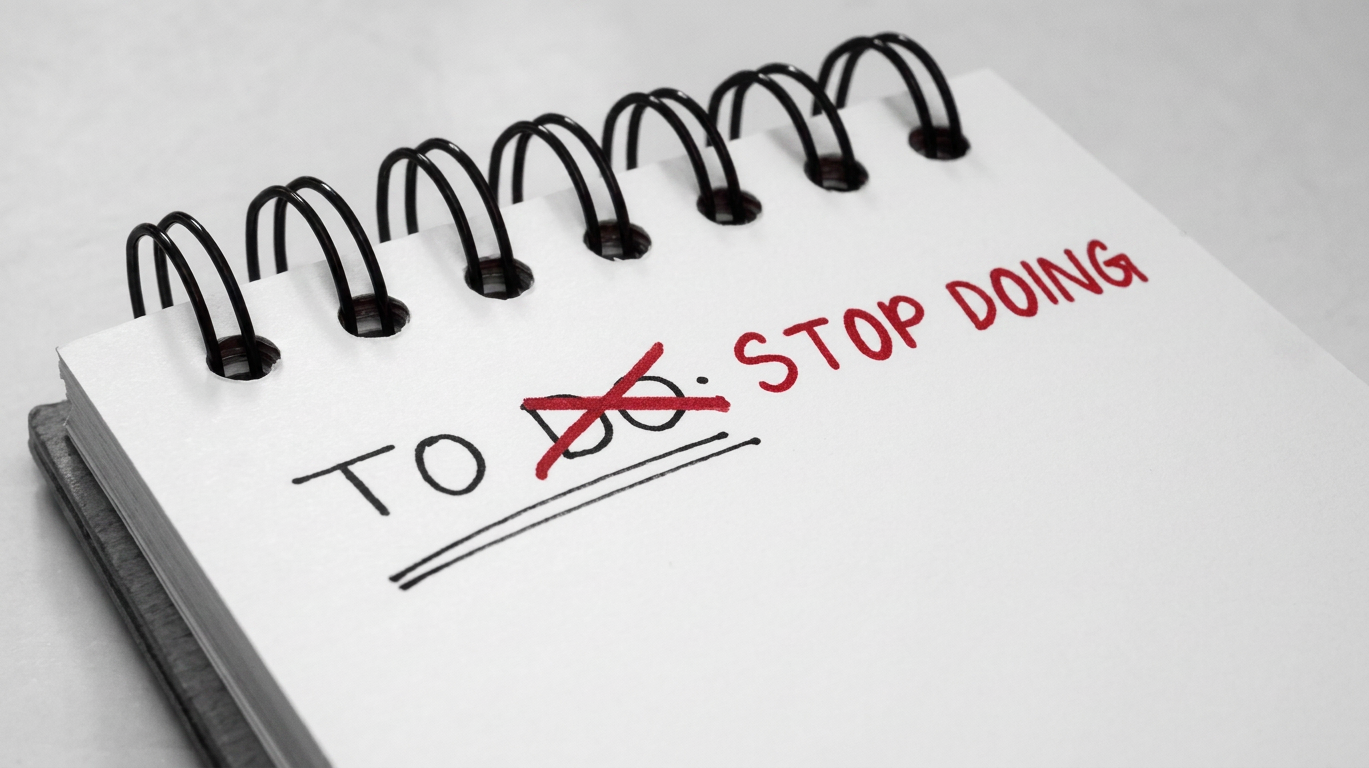
I want to finish with a last point from Jim Collins that ties all of this together.
He suggested we should think less about a “to-do” list and more about a “stop-doing” list. That matches my experience both on the bike and at work.
We’re easily seduced by the new and the sexy, whether that’s tech or training. We’ve all probably had that inner voice saying, ‘I’ll be better/succeed if I just do/have….. (insert your preference from new wheels to Rønnestad intervals).
Sometimes that can be true.
But my experience is that we’d often be more effective if we simply stopped doing stupid shit unaligned things.
The tough challenge is that the things we need to stop often give us some real value. That might be social contact on group activities or the joy of riding hard for its own sake.
So, what has been on my stop-doing list this year?
First, not riding too hard on easy days. I’ve simply accepted that as training ramps up, I need to be more polarised. And I’ve actually enjoyed that more than I expected.
Second, rationing exposure to other things I like, such as the local paceline. That’s been harder, especially when the weather’s great and I know my legs are in good shape.
And this is the key point. Strategy is not just deciding which bad ideas to avoid. Most of us (most of the time) can manage that.
It is deciding which good opportunities we’re willing to miss.
You can still want it all
Does thoughtful strategy guarantee good outcomes?
Nope.
But it does force us to decide what matters, to acknowledge the constraints we face, and to accept that if we are pursuing optimal performance in one area it usually means giving something else up.
We can still want it all. We probably can’t train effectively for it all at once.
But hey, what do I know? I’m just some chopper.


Leave a Reply